Audience: Faculty
-

Bioinformatics: Lead the next wave of innovation
Lead the next wave of innovation in life sciences and data. As biotechnology and data analytics converge, the demand for professionals who can interpret complex biological data and drive discovery continues to grow. Learn how experts in bioinformatics use computational tools, programming, and molecular biology to transform raw data into scientific and medical insights. Join Darryl…
-

Survivor Circles: Healing After Trauma
CARE’s Healing After Trauma survivor circles are an in-person, drop-in space to share and connect on the glimmers & struggles of recovering from harmful sexual experiences. Guided and led by CARE advocates, each week’s session will offer an opportunity to engage with a different alternative healing modality – from sound healing, to art therapy, collective…
-
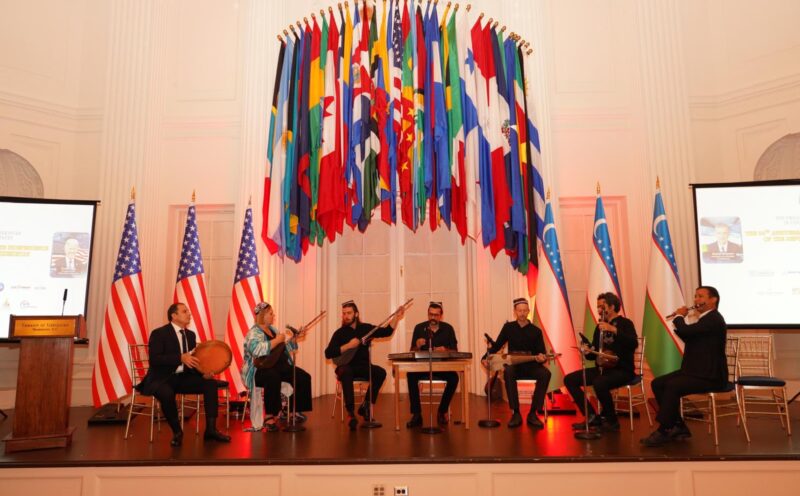
A Musical Journey with UCSC Music Ensembles —Percussion, Celtic, Classical Guitar, Horns, Central Asian, Experimental
Audiences are invited to the free winter quarter chamber concert at the Music Center Recital Hall at UC Santa Cruz to hear selections from multiple ensembles, including the following: UCSC Percussion Ensemble William Winant, director UCSC Celtic Chamber Music Ensemble Bill Coulter, director UCSC Classical Guitar Ensemble Christopher Mallet, director William Coulter, steel string guitar…
-

Moghadam, M. (CE) – Constraint-Aware Scene Understanding and Trajectory Generation Using Deep Reinforcement Learning for Autonomous Vehicles
Advanced driver-assistance systems (ADAS) are commonly organized as modular pipelines that transform raw sensor measurements into low-level actuation commands through perception, planning, and control. While learning-based methods have achieved state-of-the-art performance in perception and environment modeling, the planning layer remains a key bottleneck for reliable autonomy. Highway driving in particular requires long-horizon reasoning and socially…
-

CSE Colloquium: Co-Active AI-Assisted Programming
Presenter: Nadia Polikarpova, UCSD Abstract: AI-assisted programming has rapidly moved from novelty to default. Today, most developers use AI coding tools, and increasingly rely on agentic systems capable of making multi-step design and implementation decisions with minimal human guidance. While these systems boost productivity, they also introduce new risks: developers may disengage from the reasoning behind…
-
Teng, Z. (CM) – Visualizing Player Processes: Towards Design Guidelines for Interactive Process Visualization Tools in Game Analytics
Game analysts face a significant challenge in understanding problem-solving and decision-making processes from the vast and complex sequential data generated by modern video games. Existing visualization tools often fail to adequately support the exploration, suffering from issues of visual clutter, inflexible cohort construction, and a lack of interactive depth. To address this gap, this dissertation…
-
Hendawy, M. (CM) – Autonoming Child Online Safety in the Age of AI: From Control to Digital Co-Agency Across Cultures
Children’s lives are now inextricably linked with AI-driven digital systems that shape learning, social interaction, and development. This has elevated child online safety to a central concern for families, policymakers, and educators. This makes Child online safety a wicked socio-technical problem, emerging from the complex interplay of social norms, platform incentives, cultural expectations, and rapidly…
-
Robbins, A. (ECE) – How to train your organoid: goal-directed learning in biological neural networks
Artificial neural networks can now learn to play games, control robots, generate language, and solve complicated reasoning tasks, yet we still lack a clear understanding of how to directly guide learning in biological neural networks. We show that brain organoids can learn to solve a fundamental control task, balancing an inverted pendulum, through closed-loop electrophysiology.…
-

Harrison, D. (CS) – Multi-Level Control in Neural Dialogue Generation: Style, Semantics, and Selection through Over-Generation and Ranking
End-to-end neural generation models have largely displaced the modular architectures that once gave dialogue system designers explicit control over what is said and how it is said. While these models produce fluent text, they collapse content planning, sentence planning, and surface realization into a single undifferentiated decoding step, sacrificing the controllable structure that earlier systems…
-

What’s new in clinical research careers?
Please note that this event has been moved to Thursday, March 26. Advance your career in the global clinical research industry. As the demand for safe, effective therapies grows, so does the need for professionals who can lead clinical trials with scientific precision and regulatory expertise. Learn how experts design and manage studies that bring…