Audience: Faculty
-

Joint Senate/Admin Forum — Development of Achievement Relative to Opportunity (ARO) Guidelines for UC Santa Cruz Personnel Review
Zoom Forum We invite all faculty to provide comments and questions regarding the Academic Senate Task Force on UC Adaptation to Disruptions (UCAD) Charge, and UCAD Interim Report (July, 2025). UCAD’s purpose was to develop response strategies that aim to uphold the teaching and education, research and discovery, and public service mission areas of the…
-

Nguyen, R. (BMEB) – Development of Computational Methods for Reliable Genetic Identification of Forensic Samples
Advances in sequencing technologies have enabled the recovery of genetic data from minimal, contaminated, and highly degraded samples, overcoming long-standing barriers in forensic analysis. Nevertheless, many evidentiary samples still yield poor-quality DNA that is unconducive to PCR amplification of short tandem repeats (STRs), microarray genotyping, or deep sequencing necessary for accurate, complete genotype calls. This…
-

Applied Microeconomics and Trade Seminar Series presents: Shanjun Li
Applied Microeconomics and Trade Seminar: Shanjun Li
-
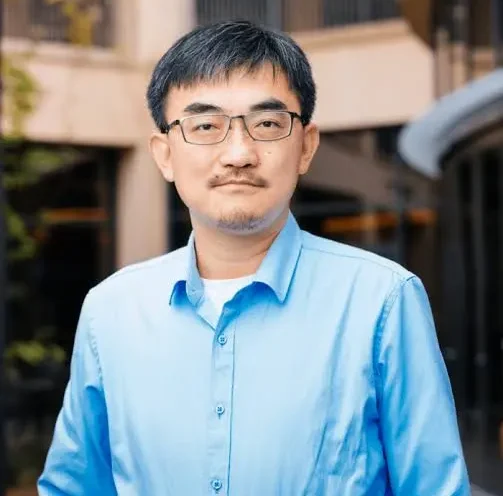
Macroeconomics & International Finance Seminar Series Presents: Zhiguo He
Macroeconomics and International Finance Seminar: Zhiguo He
-
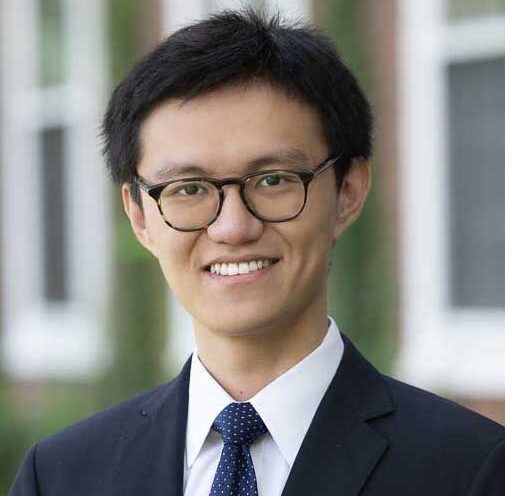
Behavioral, Econometrics and Theory Seminar Series Presents: Kevin Chen
Economics Behavioral, Econometrics and Theory Seminar: Kevin Chen
-

Indignant Liberalism: Political Protest and Generational Change in El Salvador
In 2013 anthropologist Ellen Moodie embedded with indignados—young middle-class protestors demanding that the government live up to its liberal commitments—to better understand the course of political change since the civil war. In this talk she discusses her forthcoming book, which starts with her work with urban activists of what she calls the “post-postwar” generation. She…
-

Statistics Seminar: Beyond the Average Treatment Effect: Causal Mediation Methods for Understanding Intervention Mechanisms
Presenter: Hanna Kim, Assistant Professor, Psychology Department, UCSC Description: Understanding how an intervention works is a central question in behavioral and social research, following the demonstration of its overall effect. Traditional mediation analysis techniques often assume a homogeneous mechanism of effects, overlooking both validity concerns and subgroup variation in causal pathways. In this talk, I…
-

BME 280B Seminar: Computational Models of Biological Systems
Presenter: Chen-Hsiang Yeang, Associate Research Fellow, Institute of Statistical Science of Academia Sinica Description: Computational models are roughly categorized into two types: describing the patterns of the phenomenon or data (description-driven models) and explaining the phenomenon or data with simpler, comprehensible rules (explanation-driven models). When building a model, the choice of the mixture ingredients of…
-

CSE Colloquium: A Journey from Programming Systems Research to AI Agents
Speaker: Koushik Sen, UC Berkeley and Google DeepMind Abstract: Coding has emerged as an important application area for large language models (LLMs), with a proliferation of code-specific models and their applications across various domains and tasks such as program repair, performance optimization, debugging, test generation, documentation, and security hardening. In this talk, I will describe…
-
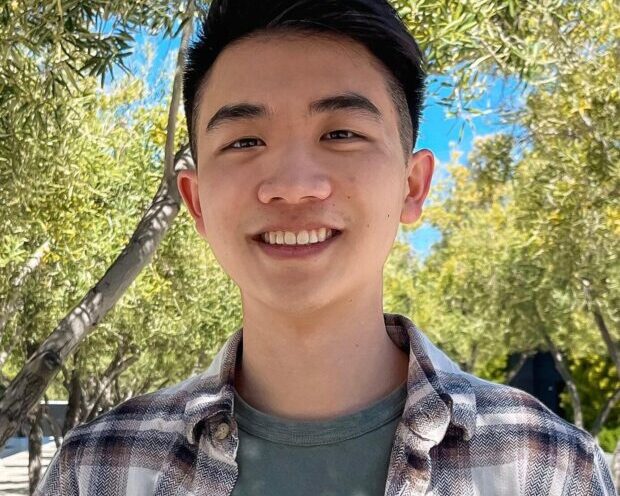
ECE 290 Seminar: Performance Bounds and Bottlenecks for Neuromorphic ML Accelerators
Presenter: Jason Yik, PhD Candidate, Harvard SEAS Description: Recent research on neuromorphic accelerators has investigated their efficiency and performance benefits for machine learning (ML) inference at the edge. This talk will focus on the performance implications of the fully-on-chip, manycore-distributed memory architecture used by current neuromorphic accelerators. In conventional architectures, the roofline model is a…