Audience: General Public
-

Harsh, B. (CSE) – SUPERSCALAR, MULTIPLE TAKEN BRANCH PREDICTOR
This work addresses improvements in branch prediction mechanism to support high perfor- mance processors. The state of the art aims to balance the prediction latency and prediction accuracy using multi level correcting predictors [27]. Prior published work focusses on scalar designs and prediction accuracy improvement for hard to predict branches employing tailor made, non generic…
-

Tu, H. (CSE) – From Evaluation to Adaptation: Building Reliable Multimodal Intelligence
Multimodal large language models (MLLMs) are rapidly becoming general-purpose AI systems, yet their capabilities are advancing faster than our ability to evaluate, improve, and validate their reliability in realistic use. Standard benchmarks mainly measure in-distribution final-answer accuracy, leaving critical gaps in safety, robustness, fine-grained reasoning evaluation, and reliability in real-world agentic settings. My research proposes…
-

Zheng, Y. (CSE) – Extending eBPF Beyond Kernel Extensions: Verified Interfaces for Runtime System Extensibility
Modern system software increasingly needs runtime extensibility: userspace applications need safe ways to expose domain-specific extension points, GPU resource management needs workload-specific memory and scheduling policies, and kernel eBPF JIT compilers need different runtime optimizations as workloads and hardware vary. However, built-in policies are safe but difficult to specialize across rapidly changing workloads and hardware…
-
Chou, Y. (CM) – Exploring Future AI-Mediated Health Creator–Audience Interactions on Social Media: Transparency, Care, and Accountability
Health and wellness content creators play an important role in shaping how people receive and engage with health information on social media. Beyond delivering information, they also convey care, build trust, and sustain relationships with audiences. As generative AI (GenAI) becomes increasingly integrated into creator work, existing research has examined AI disclosure, AI-mediated communication, and…
-
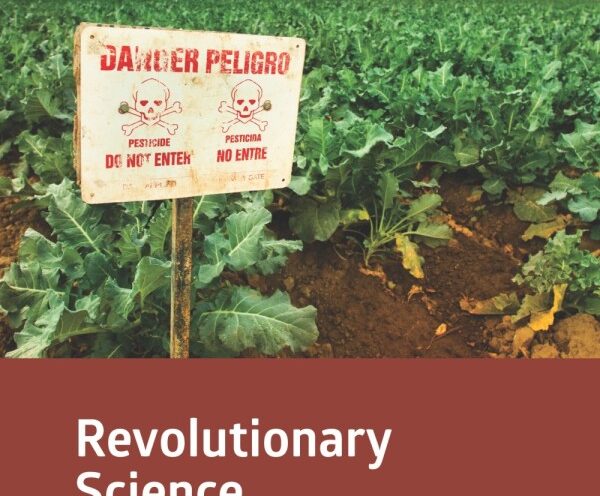
POSTPONED—Celebrating Agroecology: A book talk with Author Bruce H. Jennings and Mayor Fred Keeley
This event has been postponed. Join us for a conversation with Author Bruce H. Jennings and Santa Cruz Mayor Fred Keeley about Jennings’ new book, Revolutionary Science: The Struggle for Agroecology in the Americas. RSVP About the book As the climate crisis becomes more urgent and issues of social inequality intensify, Revolutionary Science: The Struggle for Agroecology…
-
Liu, P. (CM) – Reimagining Workplace Concern Reporting: From Emotional Harm to Co-Designed Futures
Workplace concern reporting infrastructure, including human resources (HR) portals, grievance procedures, and whistleblower hotlines, is the formal channel through which employees in most organizations raise concerns about harassment, discrimination, and retaliation. Yet existing research consistently finds that these systems fail the employees they are meant to protect: reports stall, concerns get filtered, retaliation occurs, and…
-
Zhou, K. (CSE) – Toward Safer Frontier AI: From Evaluation and Red-Teaming to Alignment and Oversight
This dissertation investigates how to make modern AI systems safer as they grow more capable. It addresses two central sources of risk: malicious misuse, in which adversarial users coerce models into harmful behavior, and internal misalignment, in which models themselves pursue goals that diverge from human intent through deception, sandbagging, or other covert behaviors. The…
-
Baskaran, D. (CM) – More than Just Fun: Exploring Meaningful Play, Communities of Play, and Relatedness of Play
Play is often seen as a form of entertainment, leisure, or childhood development. However, it also acts as a meaningful experience that shapes how people connect with others and interact with the world around them throughout their lives. Prior work on meaningful play and communities of play has mainly focused on individual experiences and participation,…
-
Yang, D. (CSE) – Inner Monologue: a Pathway to Human-Like Reasoning for Complex Tasks
A central goal on the path toward general AI is to build systems capable of deliberative reasoning before action. Such systems should inspect what they know, identify what they need, seek or construct useful information, and revise their reasoning through intermediate cognitive states. This dissertation studies this goal through the lens of Inner Monologue (IM),…
-
Castro, S. (CSE) – Agentic AI for Security: Adversarial Foundations for Autonomous Cyber Operations
Autonomous Cyber Operations (ACO) agents promise effective security automation with minimal human intervention, yet their deployment raises three interconnected challenges: agents must be realistic (reproducing diverse attacker sophistication), secure (preventing autonomy from becoming an attack surface), and feasible (safely replicating human behavior at full autonomy). We argue that these three properties are requirements for ACO…