Audience: Prospective Students
-

Levine, R. (CSE) – Validating GPU Memory Consistency and Safety at Scale
Graphics Processing Units (GPUs) have become essential platforms for parallel computing, supporting applications far beyond graphics. Central to GPU programming models is its memory consistency specification (MCS), which defines the semantics of concurrent shared-memory operations and interacts with other language features to determine security guarantees such as memory safety. Understanding whether implementations conform to an…
-

Burbano, L. (CS) – Security of autonomous decision-making agents: From control systems to embodied AI
Due to their increasing complexity, autonomous decision-making agents rely on increasingly advanced algorithms, from classical control theory to reinforcement learning (RL) and, more recently, large vision-language models. While these algorithms help automate the decision-making in complex systems, they bring newer attack vulnerabilities that an adversary can exploit. In this dissertation, we study the security of…
-
July Slugs and Steins with Assistant Professor Aide Macias-Munoz
Unlocking the blueprint for regeneration: Insights from Hydra Regeneration, the ability to heal and regrow lost body parts, varies across species, tissues, and even cell types. To harness regenerative ability for medicine, we need to understand the genetic mechanisms that are similar across regenerating species. My lab uses Hydra, a small freshwater relative of jellyfish, to investigate…
-

Carrión, H. (CSE) – Deep Learning Algorithms for Medical Image Representation Learning and Understanding
AI-assisted clinical decisions in medicine, and particularly in dermatology, demand fine-grained understanding across diverse skin tones, body sites, and disease types, yet expert-annotated datasets are scarce, demographically imbalanced, and almost devoid of rare presentations. This dissertation develops four deep learning systems for this low-label, low-coverage regime. We introduce HealNet, which learns wound healing stages from…
-
Tang, M. (STAT) – Bayesian Modeling and Scalable Inference for Count Time Series in Infectious Disease Surveillance
Real-time monitoring of infectious disease outbreaks calls for statistical models that recover interpretable quantities such as the time-varying reproduction number from noisy count data, track posterior uncertainty, and run on time scales compatible with daily updates. Existing methods address these aims through separate model classes. Discretized Hawkes processes, Poisson autoregressions, and distributed lag models each…
-
Wang, Z. (CSE) – From Static Alignment to Adaptive Safety: Toward Reliable and Capable AI Systems
Modern AI systems are rapidly moving beyond static text generation toward capable models and agents that reason, use tools, store memories, and update persistent state, yet safety methods still often assume a fixed model whose behavior can be controlled by output-level refusal. This leaves critical gaps in understanding why aligned models fail under adversarial pressure,…
-
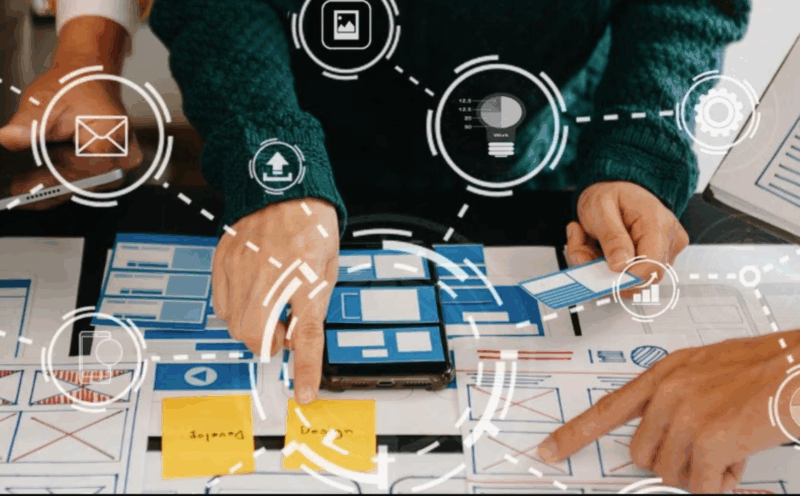
Designing for Today’s Digital World
Design digital experiences people love to use. In today’s rapidly evolving tech landscape, organizations need professionals who can combine empathy, usability, and aesthetics to create interfaces that engage and delight users. Learn how UX and web design specialists use research‑driven methods, prototyping tools, and inclusive design principles to build seamless digital experiences across platforms. Speaker…
-
Xu, D. (BMEB) – Interplay Between CENP-A, DNA Methylation, and H3K9me3 in Defining Centromere Identity
Centromeres ensure proper chromosome segregation during cell division, yet the organization and regulation of centromeric chromatin within satellite DNA arrays remain incompletely understood. Here, we leverage the complete diploid human genome benchmark (T2T-HG002) to provide a detailed study of centromeric sequence and chromatin architecture on individual haplotypes. Using adaptive-sampling-enriched, ultra-long-read DiMeLo-seq, we achieve single-molecule chromatin…
-
Figuerres, S. (ECE) – Ion Transport Mechanisms for Bioelectronics
Ion transfer as the movement of charged species across spaces and interfaces is the basis of signaling in nearly all biological systems. My research is grounded in the idea that precise control over ion transfer enables direct manipulation of biological function. Specifically, I focus on how ion transport can be engineered to regulate both collective…
-
Morey, C. (BMEB) – Innovations in Interdependence: Genomic and Functional Evolution in Invertebrates and Their Intracellular Symbionts
Intracellular symbionts are microorganisms, such as bacteria, that live within host cells. These associations are widespread throughout the invertebrate tree of life, and can perform a diversity of key metabolic, immune-response, or other functions that the host is dependent on for survival or reproduction. Intracellular symbioses allow both the host and the symbiont to occupy…