Audience: Undergraduate Students
-

Fan, Y. (CSE) – Building Human-Centered Multimodal AI Agents
As multimodal artificial intelligence systems become increasingly embedded in everyday technology, there is a growing need to design human-centered AI agents that support and amplify human capabilities rather than replace them. This dissertation investigates how to build human-centered multimodal AI agents, framing human-centeredness as an agent-level objective that requires both accessible, assistive interaction and reliable,…
-
Mashhadi, N. (CSE) – Compositional, Clinically Conditioned, and Confound-Aware Deep Learning for Alzheimer’s Disease Neuroimaging
Alzheimer’s disease (AD) is a progressive neurodegenerative disorder and a leading cause of dementia. Neuroimaging and clinical biomarkers can reveal early disease changes, but building reliable machine learning models is difficult because data come from different scanners and sites, some modalities are missing, labeled cohorts are limited, and factors such as age and scanner/site effects…
-
Xu, Y. (CSE) – Right Place, Right Time: Accelerating Edge Computation on Modern Heterogeneous SoCs
Modern edge computing increasingly relies on heterogeneous System-on-Chip (SoC) architectures. These chips tightly integrate general-purpose CPUs with various specialized accelerators, including GPUs, FPGAs, and AI accelerators, all under a shared memory architecture. Although these shared-memory SoCs enable more efficient communication and data sharing between different processing units, they are notoriously difficult to program and tune…
-
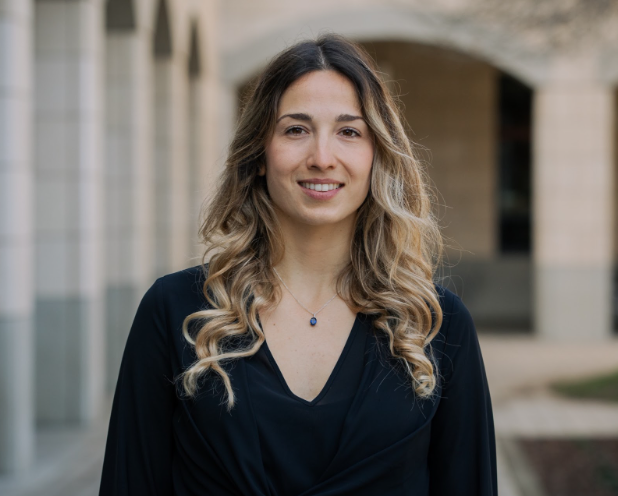
CSE Colloquium – Improving Efficiency and Reliability of Foundation Models in Clinical AI
Presenter: Vasiliki “Vicky” Bikia, PhD, Stanford Department of Biomedical Data Science and Institute for Human-Centered AI (HAI) Abstract: Deploying foundation models in health requires both computational efficiency and reliable generation. In this talk, I present two studies that address these dimensions separately but with a shared goal of real-world clinical deployment. The first study focuses on…
-

2026 Right Livelihood International Conference
The Right Livelihood International Conference is a five-week global conference exploring how education can strengthen democracy, collective intelligence, and just futures. Bringing together Right Livelihood Laureates, students, faculty, and community partners across continents, the conference combines asynchronous learning with participatory dialogue and collaborative action. Rather than advocating specific outcomes, the conference positions education as a democratic…
-

Lunar New Year SC Warriors Game with ISSP
Lunar New Year Santa Cruz Warriors Basketball Game Date: Friday, February 27 Time: 19:00 Tipoff Location: Kaiser Permanente Arena Click here to RSVP for free ticket(s) We are teaming up with the SC Warriors to offer a limited number of free tickets to their upcoming Lunar New Year-themed game! Sign up above and let us know how…
-

Unexpected Returns: The Historic Entanglements of Fire, Settlement, and Stewardship in the Santa Cruz Mountains
March 4th, 2026 from 6:00 p.m. – 7:30 p.m. Miriam Greenberg and Andrew Matthews will present the findings of UCSC researchers who have spent three years studying the ecological, social, and political economic processes that have set the stage for contemporary wildfires, in what has become known as the “Wildland Urban Interface” (WUI). Come and…
-

Queer Agroecology Day
Do you like… Queer joy? Food? Making plant dyed crafts? Dancing outside? Discussing intersections between agroecology and queer identity? Join us for the third annual Queer Agroecology Day, an event for the UC Santa Cruz student community presented by the Food Systems Working Group. For questions/accommodations email ucscfswg@ucsc.edu. This event is open to all students…
-

Liu, C. (CSE) – Enabling LLM Unlearning at Inference Time by Decomposing Detection and Intervention
Machine unlearning addresses the “right to be forgotten” under GDPR and enables privacy, copyright, and safety compliance in large language models. Training-based unlearning can remove targeted behavior on benchmarks, but it scales poorly, can degrade utility, and can fail under adversarial prompting that recovers supposedly forgotten content. This prospectus proposes inference-time behavioral unlearning: rather than…
-

CSE Colloquium – Query Optimization: How to design a Meta-Algorithm that designs Algorithms?
Presenter: Mahmoud Abo Khamis, RelationalAI Abstract: Database systems have evolved from simple bookkeeping tools to comprehensive data analytics platforms capable of learning from the data and making business decisions. As a result, database queries expanded in their expressive power and applications to include tensor computations, constraint satisfaction problems, graph analytics, scientific computing, SAT solving, among…