
• Imlau Dagostini, J. (CSE) – Intent-Driven Orchestration for Scientific Computing

    Jack Baskin Engineering Baskin Engineering 1156 High Street, Santa Cruz, CA
    Hybrid Event

    The growing complexity of high-performance computing (HPC) systems poses a fundamental challenge for domain scientists, whose primary objective is to obtain scientifically valid results rather than to optimize resource utilization. Modern leadership-class facilities combine heterogeneous CPUs, GPUs, and specialized accelerators across systems that simultaneously support traditional scientific simulations and AI-driven workloads. This creates a vast, […]

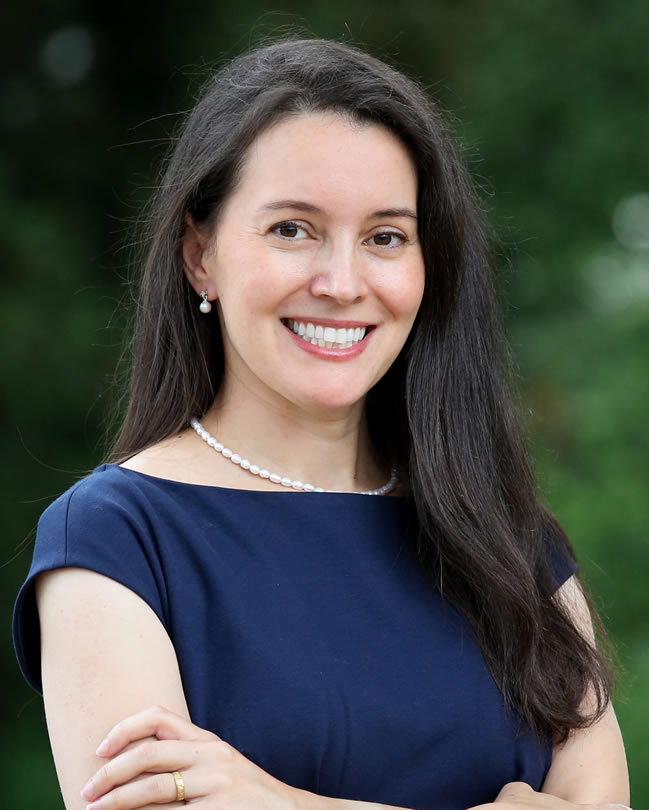
  • Chen, Z. (CSE) – GPU Subgroup Semantics for Portable High-Performance Kernels

    Engineering 2 Engineering 2 1156 High Street, Santa Cruz, CA
    Hybrid Event

    Modern high-performance GPU kernels increasingly rely on subgroup-level execution, including subgroup-level communication, subgroup operations, and matrix operations. These features are essential for workloads such as matrix multiplication and FlashAttention, but their language-level guarantees remain difficult to reason about. Existing programming models often leave unclear which threads participate in subgroup operations, when subgroup threads are required […]

  • BME80G Seminar – Sheril Kirshenbaum, “Science in Policymaking”

    Jack Baskin Auditorium 191 Baskin Cir, Santa Cruz, CA

    Please note: Following this lecture, the Genomics Institute’s Diversity, Equity, and Inclusion Committee will host a reception on the Baskin Engineering Lanai with Dr. Kirshenbaum where we can continue the discussion on how to effectively engage lawmakers and the public to value and support genomic science. Presenter: Dr. Sheril Kirshenbaum Abstract: Science shapes our world, but meaningful policy engagement […]

  • Shen, G. (CSE) – Library-Level Choreographic Programming

    Engineering 2 Engineering 2 1156 High Street, Santa Cruz, CA
    Hybrid Event

    Modern software increasingly relies on distributed systems to provide accessible, scalable, and reliable services. Choreographic programming brings a global perspective to distributed system development: programmers write a single program that […]

  • Tang, M. (STAT) – Bayesian Modeling and Scalable Inference for Count Time Series in Infectious Disease Surveillance

    Engineering 2 Engineering 2 1156 High Street, Santa Cruz, CA
    Hybrid Event

    Real-time monitoring of infectious disease outbreaks calls for statistical models that recover interpretable quantities such as the time-varying reproduction number from noisy count data, track posterior uncertainty, and run on time scales compatible with daily updates. Existing methods address these aims through separate model classes. Discretized Hawkes processes, Poisson autoregressions, and distributed lag models each […]

  • Carrión, H. (CSE) – Deep Learning Algorithms for Medical Image Representation Learning and Understanding

    Virtual Event

    AI-assisted clinical decisions in medicine, and particularly in dermatology, demand fine-grained understanding across diverse skin tones, body sites, and disease types, yet expert-annotated datasets are scarce, demographically imbalanced, and almost devoid of rare presentations. This dissertation develops four deep learning systems for this low-label, low-coverage regime. We introduce HealNet, which learns wound healing stages from […]

  • Wang, Z. (CSE) – From Static Alignment to Adaptive Safety: Toward Reliable and Capable AI Systems

    Virtual Event

    Modern AI systems are rapidly moving beyond static text generation toward capable models and agents that reason, use tools, store memories, and update persistent state, yet safety methods still often assume a fixed model whose behavior can be controlled by output-level refusal. This leaves critical gaps in understanding why aligned models fail under adversarial pressure, […]

  • BME/Genomics Seminar: Supervised and Unsupervised DeepGene Finding and Genome Foundation Models

    Engineering 2 Engineering 2 1156 High Street, Santa Cruz, CA

    Presenter: Mario Stanke, Professor of Bioinformatics, University of Greifswald Description: This talk will explore recent machine learning approaches for eukaryotic genome annotation. Our supervised ab initio deep gene finder, Tiberius, correctly predicts more than four times as many human protein-coding gene structures as its father, Augustus, and in some clades, it approaches the accuracy of […]

  • Burbano, L. (CS) – Security of autonomous decision-making agents: From control systems to embodied AI

    Engineering 2 Engineering 2 1156 High Street, Santa Cruz, CA
    Hybrid Event

    Due to their increasing complexity, autonomous decision-making agents rely on increasingly advanced algorithms, from classical control theory to reinforcement learning (RL) and, more recently, large vision-language models. While these algorithms help automate the decision-making in complex systems, they bring newer attack vulnerabilities that an adversary can exploit. In this dissertation, we study the security of […]

  • Inaugural PyTorch Santa Cruz Meetup

    Engineering 2 Engineering 2 1156 High Street, Santa Cruz, CA

    A community gathering of people interested in PyTorch and the projects that use it – not an official PyTorch organization. Sponsored by Red Hat and University of California Santa Cruz Location: Engineering 2, Room 180 ​Food, Socializing, and Excellent talks from the PyTorch Ecosystem 5:30 – 6:30 Food and Socializing 6:30 – 7:00 Talk 1 […]

    Free
  • Levine, R. (CSE) – Validating GPU Memory Consistency and Safety at Scale

    Engineering 2 Engineering 2 1156 High Street, Santa Cruz, CA
    Hybrid Event

    Graphics Processing Units (GPUs) have become essential platforms for parallel computing, supporting applications far beyond graphics. Central to GPU programming models is its memory consistency specification (MCS), which defines the […]

  • Calicchio, A. (BMEB) – Comparison of long-read sequencing and analysis methods for transcriptome analysis

    Biomedical Sciences Building 575 McLaughlin Drive
    Hybrid Event

    Alternative splicing, the process generating different RNA isoforms from a single gene, is considered one of the main factors driving increased organism complexity in eukaryotes. Variations in isoform and gene expression produce the functional differences that give rise to different cell types and, in some cases, result in disease. Long-read RNA sequencing has transformed our […]