• CSE Colloquium – Neurosymbolic AI: from research to industry

    Engineering 2 Engineering 2 1156 High Street, Santa Cruz, CA

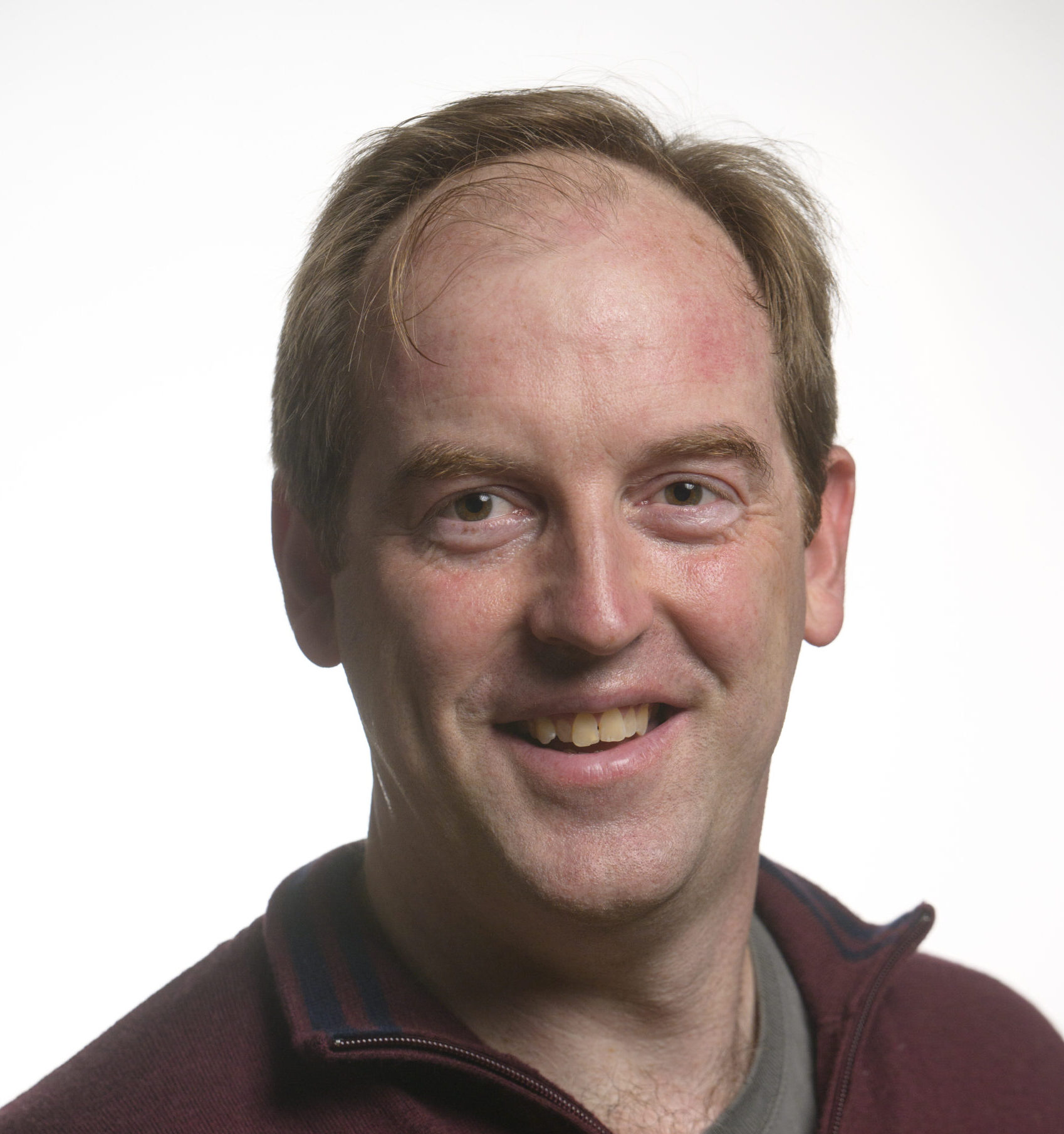
    Presenter: Luis Lamb, Catholic Institute of Technology Abstract: Neurosymbolic AI brings together the statistical nature of machine learning with the formal reasoning capabilities of symbolic AI. It seeks to offer a balanced approach to contemporary AI technologies, by combining the ability to learn from data, with the capacity to reason upon knowledge acquired from an environment. […]

    Free

  • Petety, A. (CSE) – New Algorithmic Methods for Uncertain Inputs

    This dissertation focuses on designing and proving performance guarantees on algorithms when there is uncertainty in the input. The uncertainty could be from the user being unsure or future inputs that have not arrived yet. We look at different methods in which algorithms can be designed to be competitive against the optimal. One of the […]

  • CSE Colloquium – Flux: Refinement Types for Verified Rust Systems

    Engineering 2 Engineering 2 1156 High Street, Santa Cruz, CA

    Presenter: Ranjit Jhala, UCSD Abstract: Rust has risen as a language of choice for new systems code — from OS kernels to hypervisors, firmware and run-times — as it is memory safe and provides the sort of abstractions needed for efficient low-level systems implementation. We present Flux, a refinement type checker for Rust that shows how […]

    Free
  • Jorquera, Z. (CSE) – Quantum Entanglement Bounds and the Approximation Algorithms That Use Them

    Engineering 2 Engineering 2 1156 High Street, Santa Cruz, CA
    Hybrid Event

    One of the central challenges in quantum computing is finding or approximating the ground-state energy of a local Hamiltonian, a quantum analogue of classical constraint satisfaction problems (CSPs). Among these, the Quantum Max-Cut problem serves as a canonical example, paralleling the classical Max-Cut problem. Despite its foundational importance in both theoretical computer science and condensed […]

  • Chen, Q. (CSE) – New Approximation and Online Algorithms using Novel Combinatorial Structures

    Hybrid Event

    Most optimization problems face the challenge of computing an optimum solution requiring superpolynomial time. In particular, they are classified as NP-hard problems that have no polynomial-time algorithm to date. Instead, computer scientists turn to find an approximate solution and create numerous elegant algorithms. However, in the modern era, computational environments have changed drastically, and we […]

  • When Less is More: Applications of Type-Based Underapproximate Reasoning

    Engineering 2 Engineering 2 1156 High Street, Santa Cruz, CA

    Presenter: Suresh Jagganathan, Purdue University Abstract: Unlike program verifiers, symbolic execution and property-based testing tools underapproximate program behavior: they aim to report only real bugs (no false positives), at the cost of potentially missing some (false negatives). Recent work has sought to place such tools on a more formal footing, primarily through the development of incorrectness […]

    Free
  • GradWiC Womxn’s Lunch

    GradWiC Womxn’s Lunch

    Join Graduate Womxn in Computing (GradWiC) for our final Womxn’s Luncheon of the quarter. We will be on the E2 Lanai patio weather allowing, or E2-599 in the case of inclement weather.

  • Littschwager, N. (CSE) – A Proposal for Characterizing Replicated Systems and Emulators

    Hybrid Event

    Simulation is a coinductive proof technique to assert the behavioral equivalence of computing systems that has seen fruitful application in distributed systems, concurrent process calculi, and programming languages, since the 1970’s. We have also utilized simulation in our prior work, where we formalized and proved a folklore claim that the state-based and operation-based approaches to […]

  • Garg, S. (CSE) – MAPPING ANNOTATIONS FROM NETLIST TO SOURCE CODE

    Engineering 2 Engineering 2 1156 High Street, Santa Cruz, CA
    Hybrid Event

    Hardware design flows have become increasingly complex as modern chips integrate billions of transistors and rely on aggressive synthesis optimizations to meet performance, area, and power targets. While these transformations improve circuit efficiency, they also erase the correspondence between gate-level netlists and their originating HDL source lines. The loss of traceability makes post-synthesis debugging, timing […]

  • Jamilan, S. (CSE) – Profile-guided Compiler Optimizations for Data Center Workloads

    Engineering 2 Engineering 2 1156 High Street, Santa Cruz, CA
    Hybrid Event

    Modern applications, such as data center workloads, have become increasingly complex. These applications primarily operate on massive datasets, which involve large memory footprints, irregular access patterns, and complex control and data flows. The processor-memory speed gap, combined with these complexities, can lead to unexpected performance inefficiencies in these applications, preventing them from achieving optimal performance. […]

  • CSE Colloquium: Making Systems Secure with Information Flow

    Engineering 2 Engineering 2 1156 High Street, Santa Cruz, CA

    Presenter: Andrew Myers, Cornell University Abstract: Modern civilization depends on complex, interconnected software systems that must safeguard trustworthy or private data. We have ever-growing mountains of code yet lack principled ways to build large systems that are secure. What is missing is a way to securely build these systems compositionally: module by module and layer […]

    Free
  • Ferdous, N. (CSE) – SPECSIM : A Simulation Infrastructure Mitigating Transient Timing Attacks

    Engineering 2 Engineering 2 1156 High Street, Santa Cruz, CA
    Hybrid Event

       Transient execution attacks are serious security threats in modern-day processors. Out-of-order execution compels the processor to access data that should not be otherwise perceived. Leakage of that secret information creates a covert channel for the attacker for various types of transient and speculative attacks. Transient based execution attacks emanate when the secret information is leaked […]

  • Wang, Y. (CSE) – Toward Practical and Effective Large Language Model Unlearning

    Virtual Event

    The growing integration of Large Language Models (LLMs) into real-world applications has heightened concerns about their trustworthiness, as models may reveal private information, reproduce copyrighted content, propagate biases, or generate harmful instructions. These risks, alongside emerging privacy regulations, motivate the need for LLM unlearning, methods that remove the influence of specific data while preserving overall […]

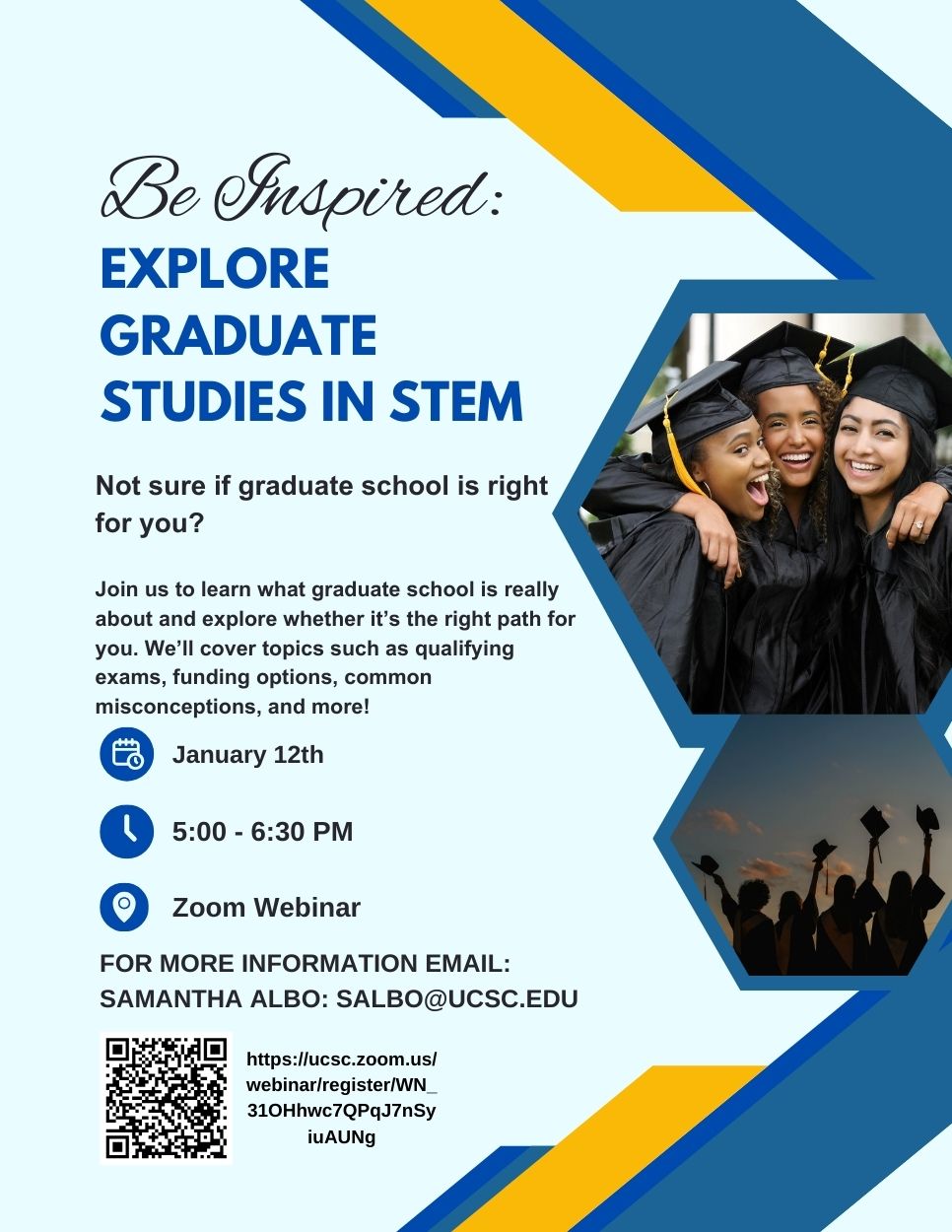
  • Be Inspired: Explore Graduate Studies in STEM

    Not sure if graduate school is right for you? Join us to learn what graduate school is really about and explore whether it’s the right path for you. We’ll cover topics such as qualifying exams, funding options, common misconceptions, and more! Click the link below to register for the event: https://ucsc.zoom.us/webinar/register/WN_31OHhwc7QPqJ7nSyiuAUNg

  • CSE Colloquium – Constraining Chaos: Toward Faithful and Semantic Decoding in Language Models

    Engineering 2 Engineering 2 1156 High Street, Santa Cruz, CA

    Presenter: Loris D’Antoni, UC San Diego Abstract: Language models excel at producing fluent text, but in domains like code and math, fluency isn’t enough — outputs must obey strict syntactic and semantic rules. A new wave of research is rethinking decoding itself: not as a process of sampling words, but as a negotiation between probability, structure, and […]

    Free
  • Sharma, R. (CSE) – Automatically Evolving GPU Libraries for Performance Portable AI Kernels

    Engineering 2 Engineering 2 1156 High Street, Santa Cruz, CA
    Hybrid Event

    GPUs are the workhorses of modern AI, widely deployed and developed by many vendors including Apple, Qualcomm, Intel, AMD, and NVIDIA. While these GPUs all offer high compute potential, programming them effectively is difficult because they differ in performance-critical features like SIMT width, cache capacity, and memory bandwidth, demanding different optimization strategies. Tunable kernels address […]

  • CSE Colloquium – Towards Relational Foundation Models: Zero-Shot Forecasting over Relational Databases

    Engineering 2 Engineering 2 1156 High Street, Santa Cruz, CA

    Presenter: Charilaos I. Kanatsoulis, Stanford University Abstract: Foundation models have transformed unstructured domains such as language and vision, yet relational datasets, where most enterprise knowledge lives, still rely on brittle, task-specific ML pipelines. I will begin by introducing Relational Deep Learning (RDL), a general framework for learning directly from heterogeneous multi-table data, capturing structure across entities, attributes, […]

    Free
  • Yang, J. (CSE) – Towards Controllable and Compositional Generative Vision

    Virtual Event

    Diffusion-based text-to-image models can generate impressive images, but they largely treat an image as a single, flat output, which makes precise editing of individual elements difficult. This proposal studies layered generative representations that align with professional editing workflows, enabling users to manipulate foreground objects while preserving the rest of the scene. A central focus is […]

  • Li, X. (CSE) – Compute-Efficient Scaling of Fully-Open Visual Encoders

    Virtual Event

    Vision encoders have demonstrated significant performance gains in visual generation and multimodal reasoning. These improvements are primarily attributed to the scaling of data, model capacity, and compute. However, this progress is becoming less accessible due to a lack of transparency in data curation and training recipes. In combination with the high compute requirements of foundation-scale […]

  • CSE Colloquium: Incentivized Alignment for Strategic Agents (Human and Otherwise)

    Engineering 2 Engineering 2 1156 High Street, Santa Cruz, CA

    Presenter: Grant Schoenebeck, University of Michigan Abstract: Advances in machine learning enable new forms of human-AI collaboration, but collaborative settings typically involve agents with divergent objectives and private information. This will become […]

    Free