Tag: seminar
-

AM Seminar: The Thinking Eye: AI That Sees, Reads, and Reasons in Medicine
Presenter: Yuyin Zhou, Assistant Professor, UCSC Description: Medical AI is undergoing a profound transformation, evolving from simple pattern recognition to systems capable of complex clinical reasoning. This talk will chart this evolution across three dimensions: data, models, and evaluation. I will first highlight the shift from limited, unimodal datasets to massive multimodal resources. In particular,…
-
Statistics Seminar: Decoding Phytoplankton Responses to a Changing Ocean
Presenter: Francois Ribalet, Research Associate Professor, School of Oceanography, University of Washington Description: François Ribalet will present new observational technologies and computational approaches for studying phytoplankton responses to ocean warming. Using SeaFlow, a custom-built automated flow cytometer deployed on over 100 research cruises, his team has collected nearly 850 billion cell measurements across global oceans.…
-

AM Seminar: Are Graph Learning Methods Actually Learning?
Presenter: Seshadhri Comandur, Professor of Computer Science, UCSC Description: There has been a lot of literature on graph machine learning over the past few years, and a bewildering array of new methods. This talk is based on a series of results making a provocative argument. Maybe many graph machine learning methods are not really that…
-
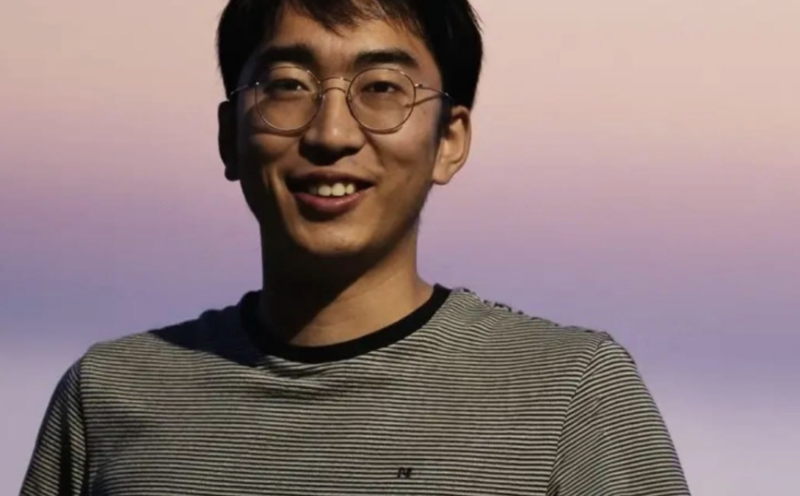
Statistics Seminar: Statistical Inference for Multi-Modality Data in the AI Era
Presenter: Qi Xu, Postdoctoral Researcher, Department of Statistics & Data Science, Carnegie Mellon University Description: Multi-modality data are increasingly common across science medicine and technology, such as imaging, text, sensors, and genomics. These modalities are often high dimensional or unstructured and naturally exhibit blockwise (nonmonotone) missingness where different samples observe different subsets of modalities. Such…
-

Statistics Seminar: Rotated Mean-Field Variational Inference and Iterative Gaussianization
Presenter: Sifan Liu, Assistant Professor, Department of Statistical Science, Duke University Description:Mean-field variational inference (MFVI) approximates a target distribution with a product distribution in the standard coordinate system, offering a scalable approach to Bayesian inference but often severely underestimating uncertainty due to neglected dependence. We show that MFVI can be greatly improved when performed along…
-

Statistics Seminar: Mathematical Foundations for Machine Learning from a Nonlinear Time Series Perspective
Presenter: Jiaqi Li, William H. Kruskal Instructor, University of Chicago Description:Modern machine learning (ML) algorithms achieve remarkable empirical success, yet providing rigorous statistical guarantees remains a major challenge, particularly in distributional theory and online inference methods. In this talk, we will introduce a novel framework to provide mathematical foundations for ML by bringing powerful tools…
-

Statistics Seminar: Inferring Unobserved Trajectories from Multiple Temporal Snapshots
Presenter: Yunyi Shen, Ph.D. Candidate, Department of Electrical Engineering and Computer Science, Massachusetts Institute of Technology Description: Practitioners often aim to infer an unobserved population trajectory using sample snapshots at multiple time points. E.g. given single-cell sequencing data, scientists would like to learn how gene expression changes over a cell’s life cycle. But sequencing any…
-

Statistics Seminar: Boosting Biomedical Imaging Analysis via Distributed Functional Regression and Synthetic Surrogates
Presenter: Guannan Wang, Associate Professor, The College of William & Mary Description: Generative AI has emerged as a powerful tool for synthesizing biomedical images, offering new solutions to challenges such as data scarcity, privacy constraints, and modality imbalance. However, the reliable use of synthetic images in scientific analysis requires principled statistical frameworks that can assess…
-

Statistics Seminar: Heterogeneous Statistical Transfer Learning
Presenter: Subhadeep Paul, Associate Professor, Ohio State University Description: In the first part of the talk, we consider the problem of Transfer Learning (TL) under heterogeneity from a source to a new target domain for high-dimensional regression with differing feature sets. Most homogeneous TL methods assume that target and source domains share the same feature…
-

AM Seminar: Probing Forced Responses and Causality in Data-Driven Climate Emulators: Conceptual Limitations and the Role of Reduced-Order Models
Presenter: Fabrizio Falasca, New York University Description: A central challenge in climate science and applied mathematics is developing data-driven models of multiscale systems that capture both stationary statistics and responses to external perturbations. Current neural climate emulators aim to resolve the atmosphere–ocean system in all its complexity but often struggle to reproduce forced responses, limiting…