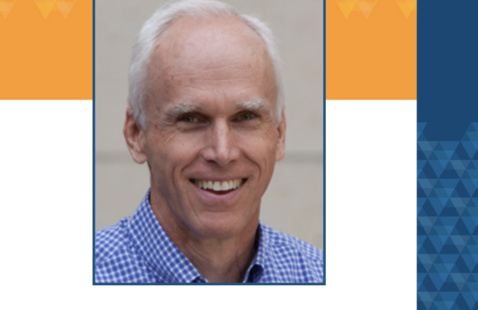
• CSE Colloquium: Can Great Programmers Be Taught?

    Engineering 2 Engineering 2 1156 High Street, Santa Cruz, CA

    Presenter: John Ousterhout, Stanford University Abstract: People have been programming computers for more than 80 years, but there is little agreement on how to design software or even what a good design looks like. As a community, we talk a lot about tools and processes, but hardly at all about design. In this talk I […]

  • ECE 290 Seminar: Operational Cybersecurity of Modern Power Systems

    Engineering 2 Engineering 2 1156 High Street, Santa Cruz, CA

    Presenter: Dr. Daniel Arnold, Lead Power Systems Engineer, Lawrence Livermore National Laboratory   Description: The adoption of new types of generation and loads, such as data centers, small modular reactors, and electric vehicles servicing equipment presents many challenges for system operators who are tasked with maintaining the safety and efficiency of the power grid.  New consumption […]

  • CSE Colloquium: Enabling scalable GPU computing via efficient virtual memory systems

    Engineering 2 Engineering 2 1156 High Street, Santa Cruz, CA

    Presenter: Hyeran Jeon, UC Merced Title: Enabling scalable GPU computing via efficient virtual memory systems Abstract: GPUs have become one of the most important accelerators of various emerging workloads. While the massive parallelism makes the GPUs one of the most favorable compute engines, the limited on-device memory capacity hinders their wider adoption. Virtual memory systems […]

  • ECE 290 Seminar: From Code to Clinic: How Regulatory Science and Virtual Trials Ensure Trustworthy AI in Medical Imaging

    Engineering 2 Engineering 2 1156 High Street, Santa Cruz, CA

    Presenter: Dr. Brandon Nelson, Staff Fellow, Division of Imaging, Diagnostics, and Software Reliability (DIDSR), U.S. Food and Drug Administration’s Center for Devices and Radiological Health (CDRH) Description: Artificial intelligence is rapidly transforming diagnostic and interventional radiology, presenting immense opportunities for improving patient care alongside significant regulatory challenges. As AI/ML-enabled devices proliferate, how do we ensure […]

  • Mavrogiannakis, A. (CSE) – Scalable Oblivious Databases and Systems

    Engineering 2 Engineering 2 1156 High Street, Santa Cruz, CA

    Modern applications are increasingly designed with a strong emphasis on scalability and performance, as systems are expected to process ever-growing volumes of data and deliver results with minimal latency. Techniques such as distributed architectures, in-memory computation, and optimized data structures are routinely adopted to meet these performance-driven demands. However, in the pursuit of speed and […]

  • Briden, M. (CSE) – Representation Learning and Generative Forecasting for Noisy and Limited Clinical Data: Applications in Wound Healing and EEG

    Engineering 2 Engineering 2 1156 High Street, Santa Cruz, CA

    The rapid integration of artificial intelligence and machine learning into clinical practice has driven advances in disease classification, segmentation, and clinical decision support. However, the complexities of medical data pose a challenge to widespread adoption. The rarity of medical conditions, ethical considerations, and varying acquisition protocols leads to limited and noisy data. The time-intensive process […]

  • Bhatia, N. (CSE) – Building Adaptive Intelligence into Wireless Sensing

    Engineering 2 Engineering 2 1156 High Street, Santa Cruz, CA

    WiFi-based indoor positioning is a widely researched area focused on determining the location of devices. Accurate indoor positioning has numerous applications, including asset tracking and indoor navigation. Despite advances, their […]

  • Osorio, S. (AM) – Image-Based Wound Infection Classification

    Engineering 2 Engineering 2 1156 High Street, Santa Cruz, CA

    This thesis investigates the use of deep learning for classifying wound infections from photographic images, using colony-forming unit (CFU) counts as a quantitative labeling standard. Leveraging the visual information in […]

  • Asefi, N. (ECE) – Generative Lagrangian Data Assimilation for Ocean Dynamics under Extreme Sparsity

    Engineering 2 Engineering 2 1156 High Street, Santa Cruz, CA

    Reconstructing ocean dynamics from observational data is fundamentally limited by the sparse, irregular, and Lagrangian nature of spatial sampling, particularly in subsurface and remote regions. This sparsity poses significant challenges for forecasting key phenomena such as eddy shedding and rogue waves. Traditional data assimilation methods and deep learning models often struggle to recover mesoscale turbulence […]

  • Mawhorter, R. (CSE) – Certified Synthesis for Interactive Media: High Assurance Metroidvania Generation

    Engineering 2 Engineering 2 1156 High Street, Santa Cruz, CA

    Program verification has been applied in many contexts (including videogames), but the scale and complexity of the examples that have been analyzed fall short of the ability to analyze many existing games without massive computational costs. My research focuses on automatic analysis and design of one particular game: Super Metroid, with the goal of creating […]

  • Larsen, B. (CMPM) – Communal Narrative Play in Perennial Games

    Engineering 2 Engineering 2 1156 High Street, Santa Cruz, CA

    Online communities tell stories with the games they play. As continual updates, recurring monetization, and platforms for community discussions have flourished, we have seen a rise in video games using ongoing development to tell stories, and have a community interact with those stories and build upon them. In this dissertation, I study this phenomenon, which […]

  • Basu, S. (CSE) – Decomposition Techniques for Web-Scale Networks: Bridging Theory and Practice

    Engineering 2 Engineering 2 1156 High Street, Santa Cruz, CA

    Decompositions of large-scale networks are central to many applications in graph mining, network science, and algorithm design. Over several decades, a rich body of work has developed techniques to partition networks with various different objectives. However, a noticeable gap persists between methods with strong theoretical guarantees, and those that perform well in practice. Practical algorithms […]