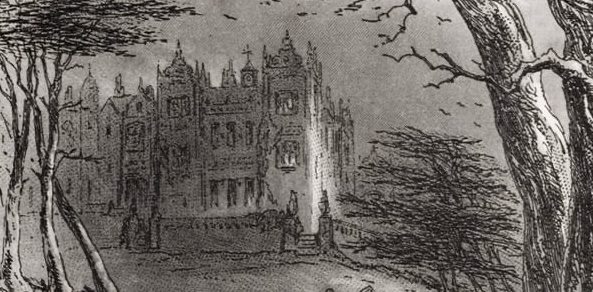
Santa Cruz Pickwick Club presents: Bleak House
Spontaneous human combustion! Evil lawyers! Detectives! Family intrigue! Join the Pickwick Club for a series of discussions about ‘Bleak House.’
Free
Spontaneous human combustion! Evil lawyers! Detectives! Family intrigue! Join the Pickwick Club for a series of discussions about ‘Bleak House.’
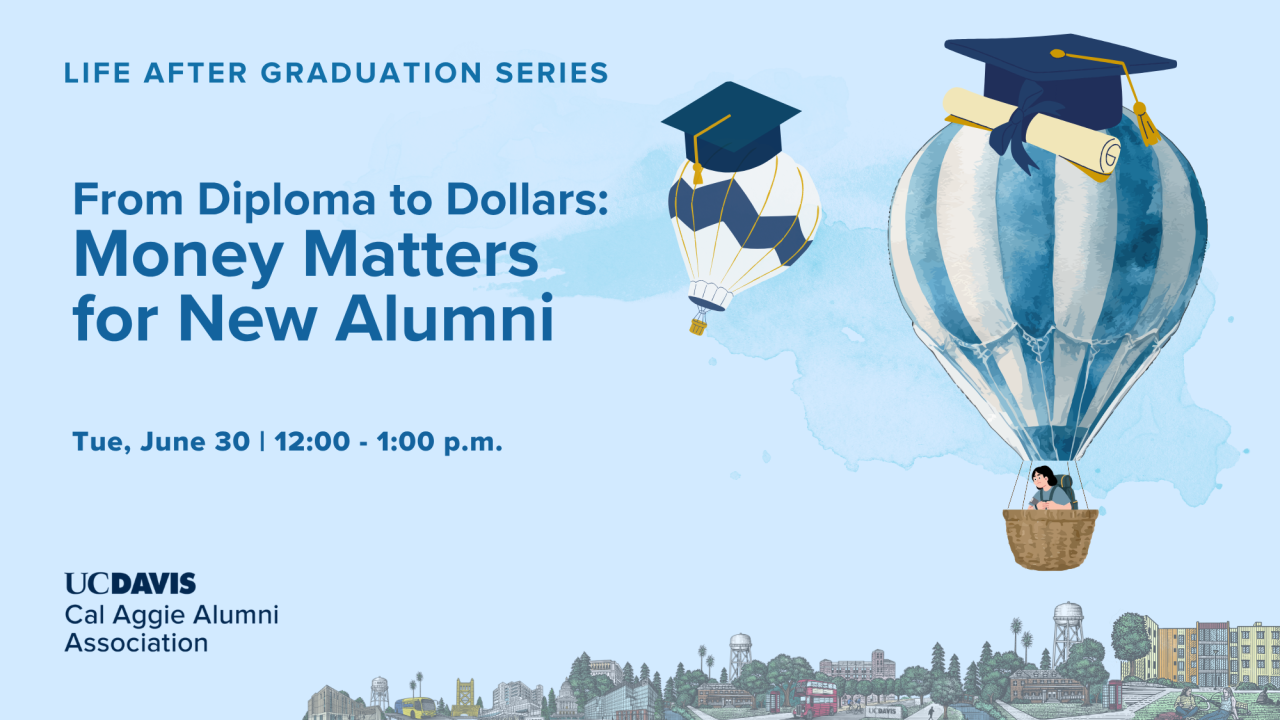
Life After Graduation Series Hosted by UC Davis, open to recent alumni and rising seniors of all UC campuses. Join the Cal Aggie Alumni Association for another session in the Life After Graduation Series, “From Diploma to Dollars: Money Matters for New Alumni,” on Tuesday, June 30 at 12:00 p.m. (Pacific Time). Graduation is behind you—now it’s […]
First Saturday Tours are a wonderful way to introduce yourself to the Arboretum or to deepen your knowledge of the Arboretum’s plant collections. Each tour is a little different depending on the time of year, the interests of the tour guide, and the people who join in. For example, you might learn about the birds […]

AI-assisted clinical decisions in medicine, and particularly in dermatology, demand fine-grained understanding across diverse skin tones, body sites, and disease types, yet expert-annotated datasets are scarce, demographically imbalanced, and almost devoid of rare presentations. This dissertation develops four deep learning systems for this low-label, low-coverage regime. We introduce HealNet, which learns wound healing stages from […]

Graphics Processing Units (GPUs) have become essential platforms for parallel computing, supporting applications far beyond graphics. Central to GPU programming models is its memory consistency specification (MCS), which defines the semantics of concurrent shared-memory operations and interacts with other language features to determine security guarantees such as memory safety. Understanding whether implementations conform to an […]
Dual Attention Transformers (DATs) extend decoder-only Transformers with a dedicated relational-attention stream, making them a natural architecture for abstract identity rules such asABA and ABB. Surprisingly, we find that comparably sized GPT-2 models outperform DATs on these tasks. We investigate this gap with two complementary mechanistic analyses. First, causal mediation analysis shows that DATs exhibit […]
While the human brain learns continually, mastering new tasks without forgetting the old and adapting to unfamiliar ones from context alone, modern neural networks still lack both. To bridge the gap between biological adaptivity and modern AI, we have established foundational work on sparsity as a computational principle at three levels of neural computation, through […]
Unlocking the blueprint for regeneration: Insights from Hydra Regeneration, the ability to heal and regrow lost body parts, varies across species, tissues, and even cell types. To harness regenerative ability for medicine, we need to understand the genetic mechanisms that are similar across regenerating species. My lab uses Hydra, a small freshwater relative of jellyfish, to investigate […]
Alternative splicing, the process generating different RNA isoforms from a single gene, is considered one of the main factors driving increased organism complexity in eukaryotes. Variations in isoform and gene expression produce the functional differences that give rise to different cell types and, in some cases, result in disease. Long-read RNA sequencing has transformed our […]

Games user researchers (GURs) use various methods to understand when a game is overloading its players. In games research where data-driven multimodal approaches are necessary to drive insights, the currently available tools to measure user load are coarse, one-dimensional, and often aggregated. The more dominant instruments, such as the Cognitive Load Scale (CLS) and the […]
Time series data with dependence arise across a wide range of scientific and engineering disciplines, often presenting challenging inferential problems related to structural change and clustering. This Ph.D. proposal addresses several related problems in statistical inference for multivariate and network-indexed time series. First, we develop a weighted multivariate $U$-statistic procedure for detecting a single changepoint […]
Three learners who fail the same level of an educational game the same number of times can be failing in three different ways, and the difference determines what each should […]

Join UC Santa Cruz Healthcare Pathways for a live online information session to learn about our Premed Postbacc Cohort, Premed and Pre-Health DIY Pathways, and other program offerings. We’ll provide an overview […]
While large language models can match or exceed human performance, they do so with memory and energy costs orders of magnitude greater than biological cognition. We investigate sparsity as a […]
A ubiquitous task in statistical practice is that of variable selection, identifying which of a large set of features are the relevant ones. As data sets with a large number […]

The Dickens Universe is a unique cultural event that brings together scholars, teachers, students, and members of the general public for a week of stimulating discussion and festive social activity—all focused on Victorian literature. In 2026, the Dickens Universe will feature ‘Bleak House’ by Charles Dickens.

The Dickens Universe is a unique cultural event that brings together scholars, teachers, students, and members of the general public for a week of stimulating discussion and festive social activity—all focused on Victorian literature. In 2026, the Dickens Universe will feature ‘Bleak House’ by Charles Dickens.
The Dickens Universe is a unique cultural event that brings together scholars, teachers, students, and members of the general public for a week of stimulating discussion and festive social activity—all focused on Victorian literature. In 2026, the Dickens Universe will feature ‘Bleak House’ by Charles Dickens.
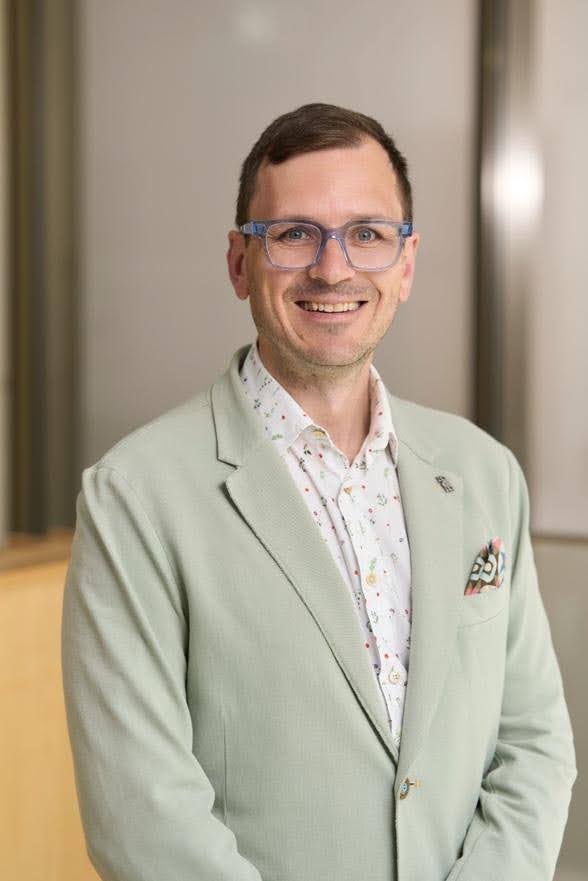
Presented by: Paolo Actis, Associate Professor of Bionanotechnology at the University of Leeds Description: “Physiological and pathological processes within the human body are controlled by complex cell-cell interactions within the context […]
The Dickens Universe is a unique cultural event that brings together scholars, teachers, students, and members of the general public for a week of stimulating discussion and festive social activity—all focused on Victorian literature. In 2026, the Dickens Universe will feature ‘Bleak House’ by Charles Dickens.