
Your Next Degree: Graduate School
Careers and academic interests often evolve over time, and many people choose to pursue graduate education after gaining experience in the workforce or further exploring their fields. Whether you are […]
Free
Careers and academic interests often evolve over time, and many people choose to pursue graduate education after gaining experience in the workforce or further exploring their fields. Whether you are […]

To celebrate another year of profound discoveries, uplifting unheard voices, and opening up the world for the next generation of students, the Academic Senate is planning a year-end celebratory event on Wednesday, May 27, 5-7:30 pm (week 9), at the Haybarn. But lest you think this is yet one more end-of-year academic event with mind-numbing […]

Verify faster. Build better chips. Semiconductor Design Info Session Explore the fast-paced world of semiconductor design and verification, and how advanced tools—including AI—are transforming the industry. At this info session, instructor Mandar Munishwar, a formal verification architect at the Intel Data Center and AI Division, will discuss his SystemVerilog Assertions and Formal Verification course which prepares you to write […]

Modern datacenter CPUs lose 25–66% of execution cycles to instruction-delivery stalls. This bottleneck persists, despite the recent trend towards accelerators and GPUs, as there is continuing demand by applications that […]

Please join us for our BME 280B seminar series Thursday (5/28/26) in person at Biomed 200. The event will run from 11:40 AM to 1:15 PM and feature our 4th […]

Autonomous systems, such as Autonomous Vehicles (AVs) and drones, are increasingly deployed across a wider array of contexts for both civilian and military use. As these systems become more common, […]

A central goal on the path toward general AI is to build systems capable of deliberative reasoning before action. Such systems should inspect what they know, identify what they need, […]

Transform learning Join Diana Black Kennedy, chair of UCSC Silicon Valley’s Educational Therapy certificate program, to learn how this distinctive program prepares educators and professionals to create meaningful, lasting impact. As one of the few programs approved by the Association of Educational Therapists (AET), it equips you with the skills to assess learning differences and implement research-based, […]
This dissertation investigates how to make modern AI systems safer as they grow more capable. It addresses two central sources of risk: malicious misuse, in which adversarial users coerce models […]
Electrochemical impedance spectroscopy (EIS) is the workhorse measurement behind lithium-ion battery diagnostics, biosensing, and corrosion science — yet no integrated circuit has ever delivered the complete capability of a benchtop […]
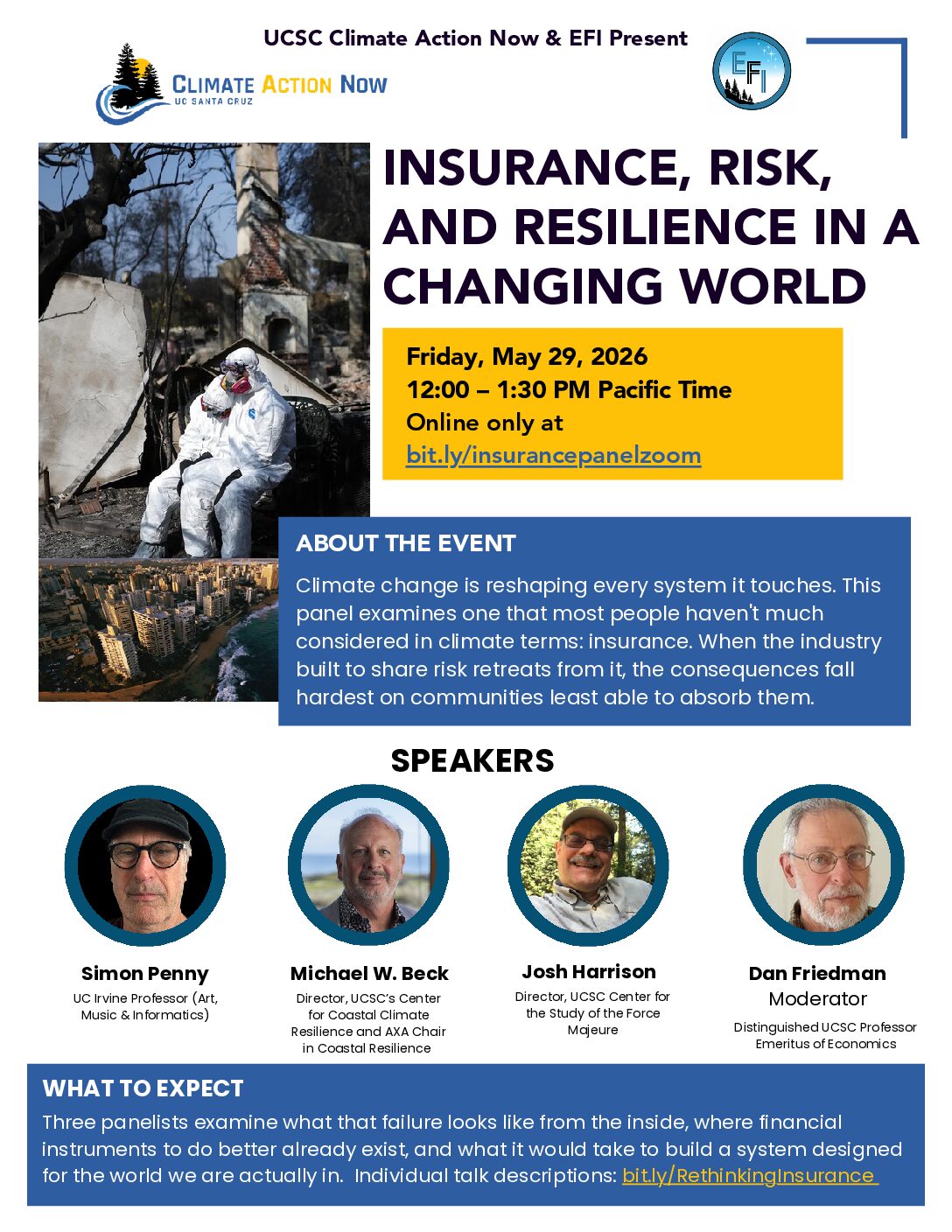
Climate change is reshaping every system it touches. This panel examines one that most people haven’t much considered in climate terms: insurance. When the industry built to share risk retreats […]
Presenter: Katherine Bonini, Senior Genetic Counselor @ Icahn School of Medicine at Mount Sinai Description: It has long been argued that families are central to genomic medicine. Genomic risk, diagnosis, and […]
This dissertation investigates how neuromorphic and brain-inspired principles can guide the design of efficient neural language architectures. It addresses two central limitations of modern Transformer-based language models: memory growth with […]
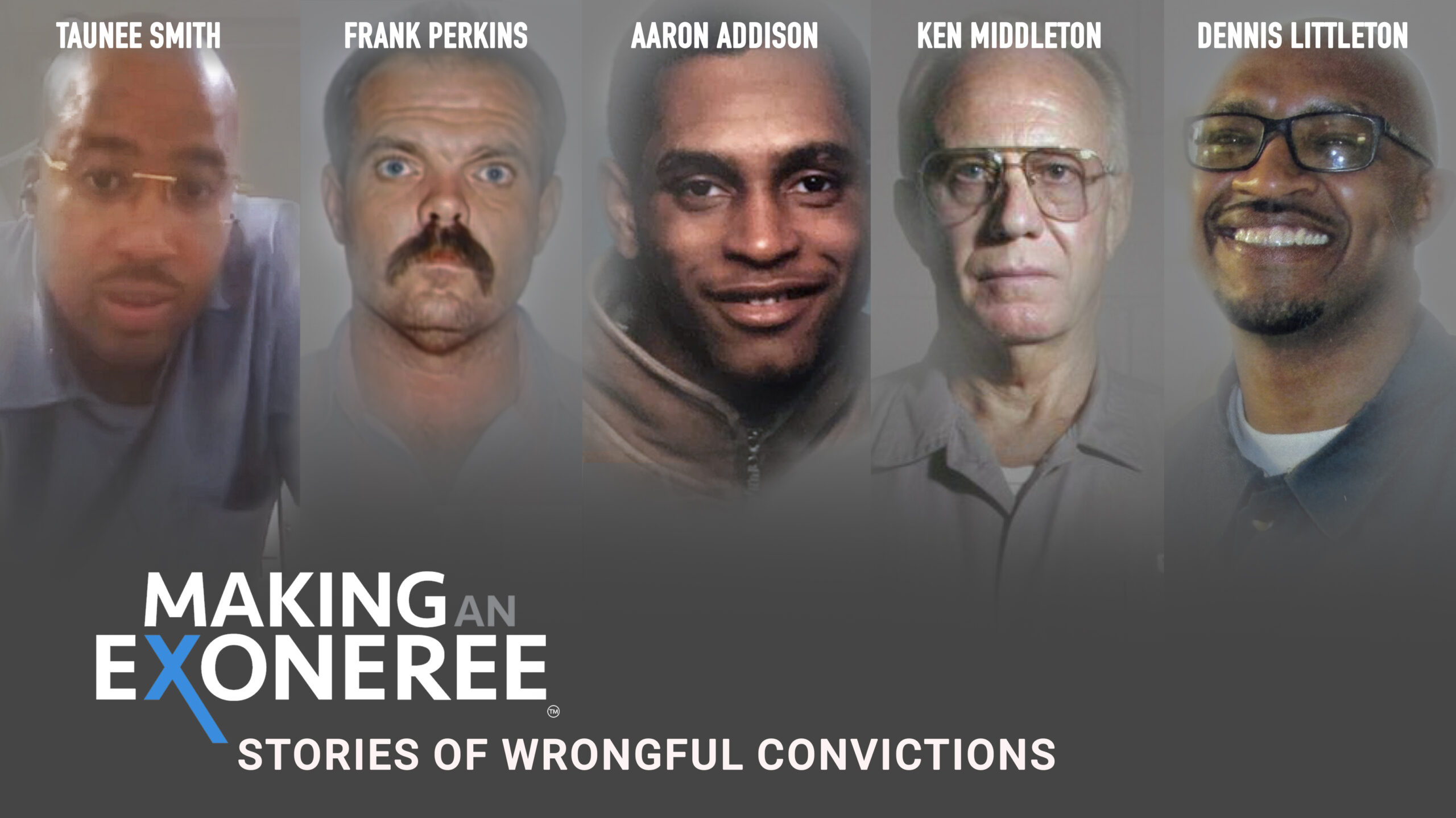
Audiences are invited to Making an Exoneree, a reception and film screening featuring the premiere of five student-made short documentaries that reveal the facts—and falsehoods—of wrongful conviction cases from around the country. Over the Winter and Spring quarters, 15 UCSC undergraduate students in the Making an Exoneree course dedicated themselves to uncovering the truth about […]

Presenter: Sung-Mo “Steve” Kang, Distinguished Professor Emeritus and Research Professor, UC Santa Cruz Description: Recently, applications of artificial intelligence (AI) have far outpaced Moore’s law in chip development, thus creating an increasingly large gap between user demand and the supply that the semiconductor industry can deliver. In this talk, we will discuss the unique […]

Presented by: Alex Olwal Description: “In this talk, I will share my perspectives on the evolution and future of human-centered augmentation, through the lens of two decades of research and development. Drawing from experiences across academia and industry, I will discuss insights from having led projects in augmented reality, accessibility, electronic textiles, novel sensing and […]

Host: ENVS Personnel Committee Groundwater is a critical source of California’s water supply. Many basins in critical overdraft are now being managed under the 2015 Sustainable Groundwater Management Act (SGMA) to support state goals of sustainable and equitable management. However, court adjudicated basins that encompass over 8,000 square miles and are home to nearly 11 […]
Presenter: Denis Titov, Assistant Professor, University of California, Berkeley Description: Cells run thousands of chemical reactions simultaneously, and these reactions must be precisely controlled—like a thermostat that prevents overheating. When this control fails, diseases including diabetes, cardiovascular disease, and fatty liver disease result. One key control mechanism is allosteric regulation, where a small molecule binds […]

Lead the next wave of innovation in life sciences and data As biotechnology and data analytics converge, the demand for professionals who can interpret complex biological data and drive discovery continues to grow. Learn how experts in bioinformatics use computational tools, programming, and molecular biology to transform raw data into scientific and medical insights. Your […]
Recently, a class of non-invasive hardware side-channel attacks has been discovered in field-programmable gate arrays (FPGAs). These attacks extract remnants of prior users’ activity that persist as transistor defect states within reconfigurable routing resources. These remnants are known as FPGA Pentimenti. Resistive random-access memory (ReRAM) is a compelling candidate for pentimenti-like attacks beyond FPGAs. However, […]